Why is my water heater leaking from the bottom
Water pooling at the base of a water heater can mean a failed tank, a valve doing its job, or a loose connection. Here is how to tell which one it is, and what to do first.
A puddle at the base of a water heater is never a small thing, but it is not always a dead tank. Water can come from the tank itself, from the temperature-and-pressure relief valve, from the drain valve, or from a connection at the top that runs down the side and pools at the bottom. This guide shows you how to tell which one it is, what to do first, and when the honest answer is replacement rather than repair. No prices are listed, because the cost depends on what is leaking and how old the unit is, and any number printed here would be a guess.
First: make it safe
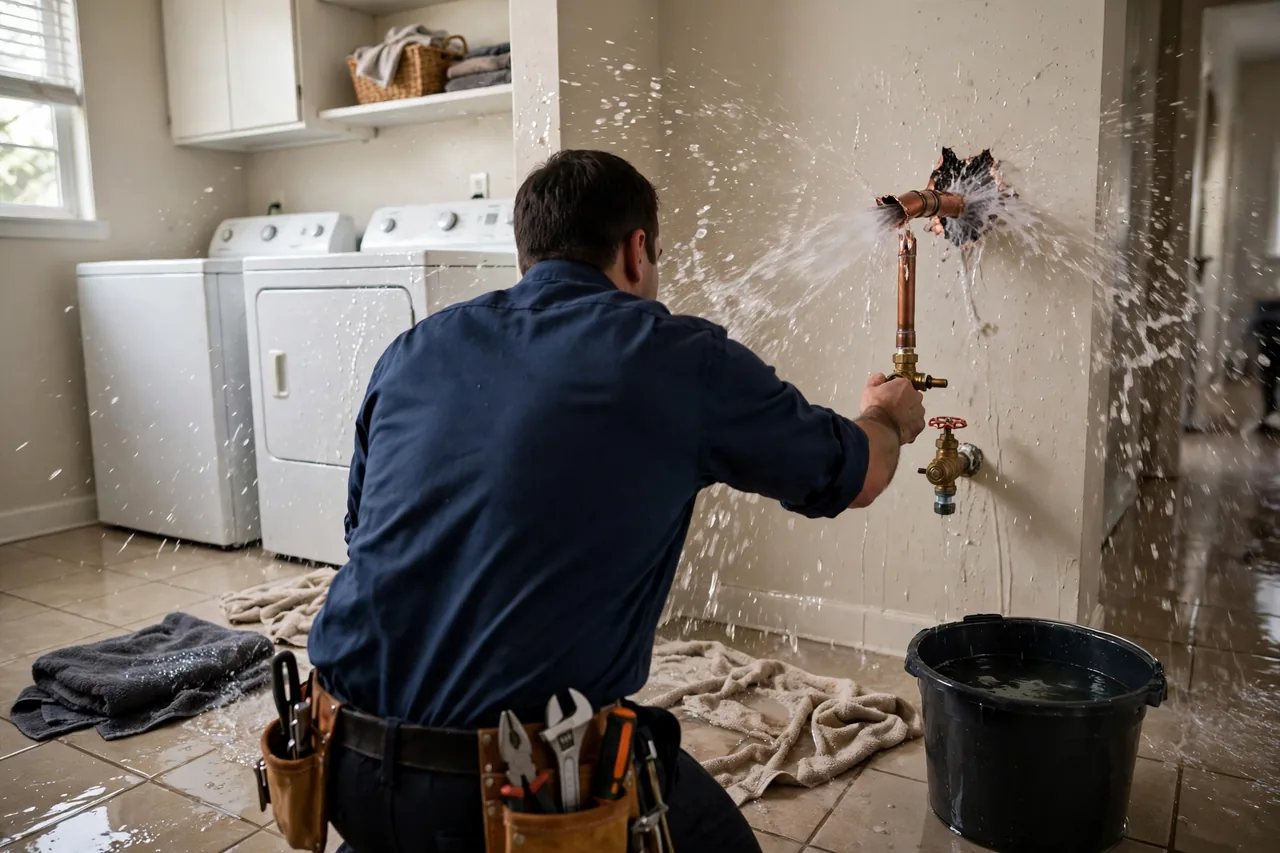
Water and a water heater are a combination to respect. For an electric unit, turn off the power at the breaker. For a gas unit, turn the gas control valve to off if you know how. If you smell gas, leave the house and call the gas utility or 911 first, and the plumber second. Shut off the cold water supply valve at the top of the unit to stop more water entering the tank, and open a hot tap somewhere in the house to relieve pressure. Do not touch a relief valve that is discharging hot water, and do not try to cap or plug a leaking valve. If the leak is large, call a plumber promptly: a tank can empty a large amount of water onto the floor in a short time.
Tank corrosion: the leak that means replacement
If water is seeping from the bottom seam of the tank, or from a rusted spot on the tank wall, the tank itself has corroded through. A storage tank is steel with a glass lining and a sacrificial anode rod that protects it, and once the lining fails and the steel rusts through, there is no repair: the tank is replaced. Signs are rust-coloured water from the hot taps, a rusty patch or blister on the tank, and water that returns after the valves and connections are ruled out. The age of the unit matters here: a tank near the end of its expected life that leaks from the bottom is a replacement, not a repair, and a plumber who offers to patch a corroded tank is offering a short delay, not a fix.
The T&P valve: a safety device doing its job
The temperature-and-pressure relief valve, the T&P valve, sits on the side or top of the tank with a discharge pipe running down toward the floor. Its job is to open if the temperature or pressure inside the tank gets too high, and it must have a discharge pipe routed to a safe location that falls continuously and is never capped or trapped. If water is coming from the end of the discharge pipe, the valve may be doing its job because the pressure is too high, or the valve itself may have failed and be weeping. Do not cap the discharge pipe, and do not replace the valve without finding out why it opened: a valve that keeps opening is a symptom, and the cause may be a closed system that needs thermal expansion control. A plumber can test the pressure and the valve and tell you which it is.
Drain valve and connections
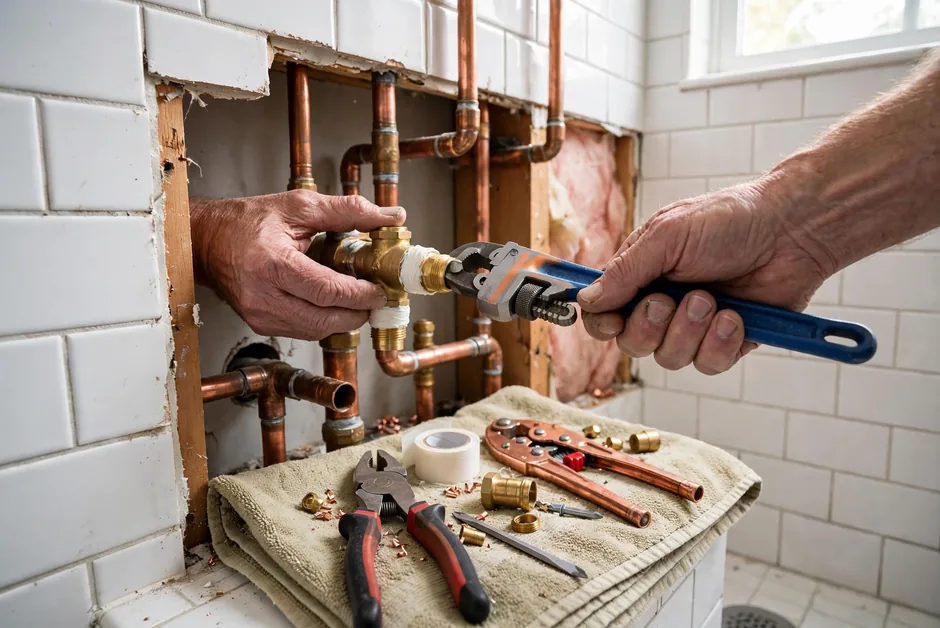
The drain valve at the bottom of the tank is a common leak point: its washer wears, its threads corrode, or it was left slightly open after the tank was last flushed. Try closing it firmly by hand, and if it still drips, the valve needs replacing, which is a small job. Connections at the top of the tank can also leak and run down the side, pooling at the bottom and looking like a tank leak. Dry the tank, then watch: if water appears at a top connection first, the connection is the cause. Sediment and mineral scale build up in every tank over time, and a tank that has never been flushed will have more of it, which can shorten the life of the tank and the valves. Cleveland's water is groundwater from the Jasper and Evangeline Aquifers, and groundwater can leave mineral scale in a tank; the City's report does not publish a hardness figure, so no hardness number is given here.
Repair or replace: how to decide
The decision turns on what is leaking and how old the unit is. A leaking drain valve, a loose connection, or a failed T&P valve on a younger tank is a repair. A tank that leaks from its own wall or bottom seam is a replacement, whatever its age. A tank that is old, rusty, and leaking in more than one place is a replacement too, because repairing one leak leaves the next one waiting. Ask the plumber to show you where the water is coming from before you agree to anything, and get the quote in writing. Our water heater repair team handles valves and connections, our water heater installation page covers replacement, and our tankless water heater services page covers the tankless option if you are replacing anyway. Homeowners in Downtown Cleveland with older tanks should have the unit checked before it fails, because a tank that fails while nobody is home does its damage unseen.
Frequently Asked Questions
Why is my water heater leaking from the bottom?
Usually tank corrosion, a T&P valve discharging, a leaking drain valve, or a connection at the top running down the side. Dry the tank and watch where the water appears first to tell which one it is.
Can a leaking water heater be repaired?
A leaking drain valve, a loose connection, or a failed T&P valve can be repaired. A tank leaking from its own wall or bottom seam cannot be repaired and must be replaced.
What should I do first if my water heater is leaking?
Turn off the power at the breaker for an electric unit, or the gas control for a gas unit. Shut off the cold water supply to the tank. If you smell gas, leave and call the gas utility or 911.
What is the T&P valve on a water heater?
The temperature-and-pressure relief valve opens if the temperature or pressure inside the tank gets too high. Its discharge pipe must run to a safe location and must never be capped or trapped.
Does sediment cause a water heater to leak?
Sediment and mineral scale build up in every tank and can shorten the life of the tank and its valves. A tank that has never been flushed has more of it. Cleveland's groundwater can leave mineral scale in a tank.
Get help with plumbing in Cleveland
If a water heater in your Cleveland home is leaking from the bottom, call Precision Plumbing LLC at (346) 687-0011 during business hours, Monday through Saturday, 7:00 AM to 5:30 PM. We find the source of the leak, quote in writing on request, and test the repair before we leave.